Cherchies Blog

cooking tips

Cooking Tip: How To Make Homemade Caramel Sauce

cooking tipsSheri SpalloneComment
Cooking Tip: How To Make Homemade Caramel Dip…And How To Use it!

Cooking Tip: How To Make Homemade Caramel Dip…And How To Use it!

Cook Time: At most 10 minutes

Difficulty: Easy

Yield: About 1 cup

With Fall in full swing, and the holidays fast approaching, nothing melts our hearts more than dreamy, homemade caramel sauce! Rich, creamy, buttery, caramel…add a pinch of salt and your taste buds will go into overload. It is the perfect compliment to your favorite dessert and beverage; and an absolute necessity for your holiday entertaining.

Follow along below as we share the steps of this easy recipe and clever ways to use it.

What is your favorite use for caramel? We would love to hear from you!

Thank you for stopping by:) Comment below if you have made this recipe. Revisit us for more family-tested recipesentertaining ideas, and cooking tips using all our favorite Cherchies® gourmet products.

Follow us on social media: Facebook, Instagram, and Pinterest.

Here Are The Gooey Details

Ingredients

  • 1 cup of brown sugar

  • 6 Tablespoons (Tbsp.) unsalted butter, cut into small pieces

  • 1/2 cup heavy cream or half and half, room temperature

  • 1/2 teaspoon (tsp) sea salt (if want salted caramel, add up to 1 tsp. salt- Kosher salt is fine too)

  • 1/2 teaspoon vanilla (you could substitute your favorite liquor for an extra special adult treat…we won’t tell, but make sure to keep away from the kiddos).

Preparation

There seems to be some debate out there in cyber world about making homemade caramel sauce, and whether or not to melt the sugar first with butter or add the butter at the end along with the rest of the ingredients. I have tried both ways with the end result being the same. Quoting my mother, “If it ain’t broke, don’t fix it” (okay, she did not say ain’t, but you get the idea), so this is my version for a creamy, delectable caramel sauce/dip. It really is very easy, and only takes a few minutes.

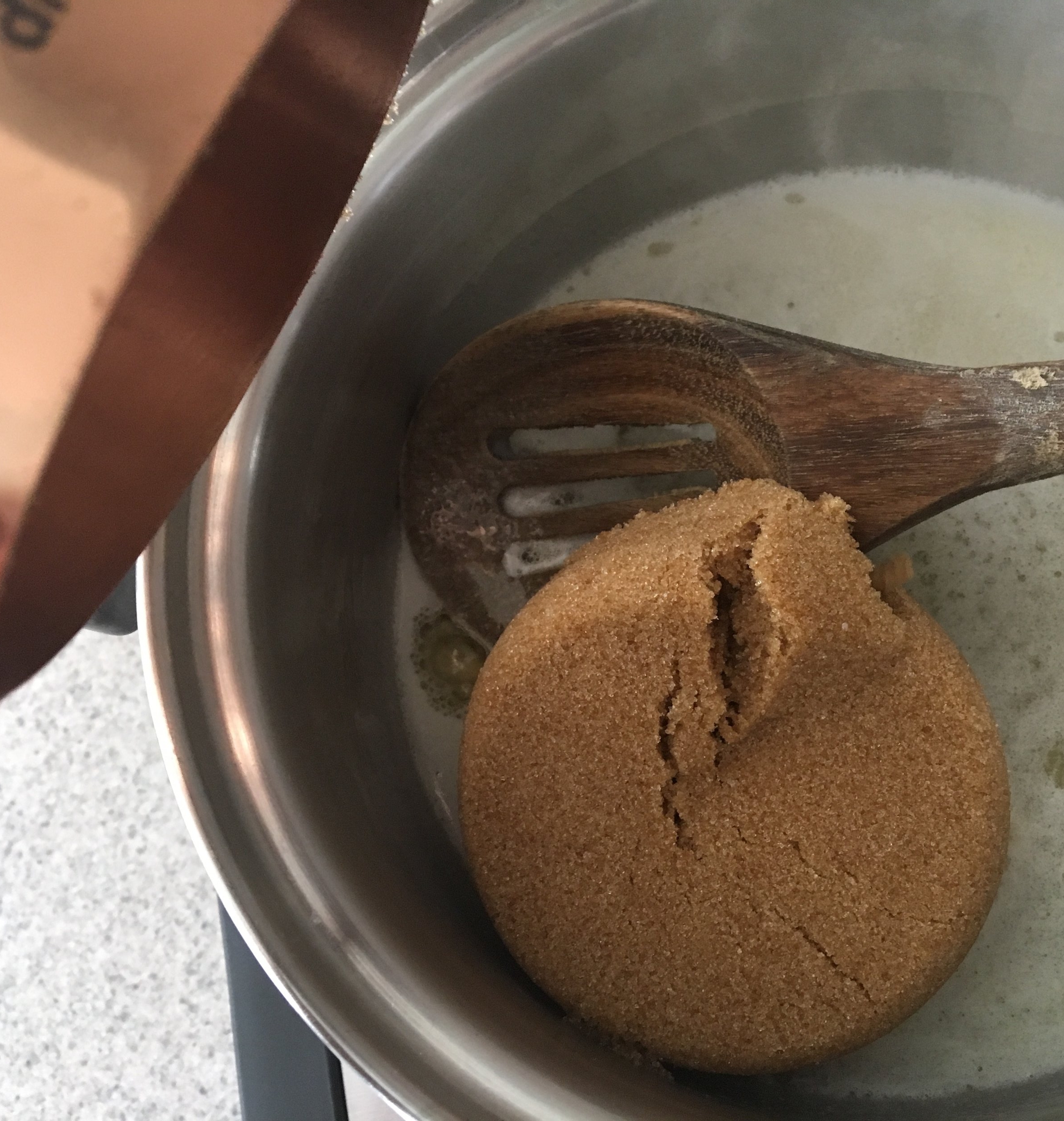
The caramelization process happens quickly, so make sure all your ingredients are measured and in place before you begin. Start with a medium-sized stainless steel sauce pan (ceramic would work just fine too). Add the butter chunks to the pan, turn the heat on low, and gently stir the butter with a wooden spoon (you can use a whisk too) until it melts. Once the butter has melted, add the sugar and continue to stir until the sugar has melted. (Sugar will be HOT! Trust me, and learn from my mistakes, do not be tempted to taste the caramel at any time, until it has cooled! Many sites I researched suggest having a bowl of cold water on hand in case of flying molten sugar. Yikes! Do not be afraid, but be safe.) As you are stirring, scrape the sugar that forms on the side with the spoon or a rubber spatula and incorporate into the mix.
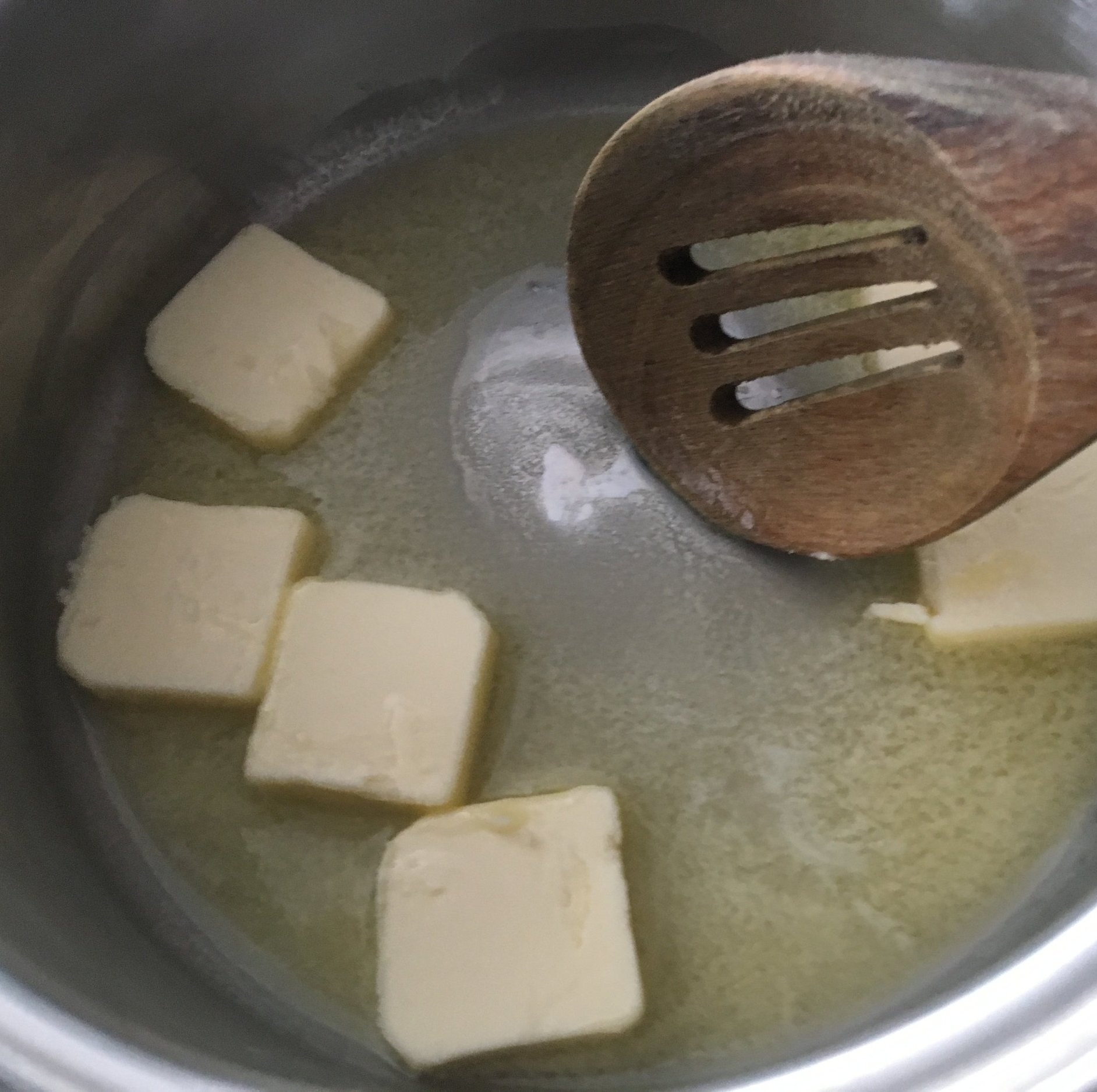
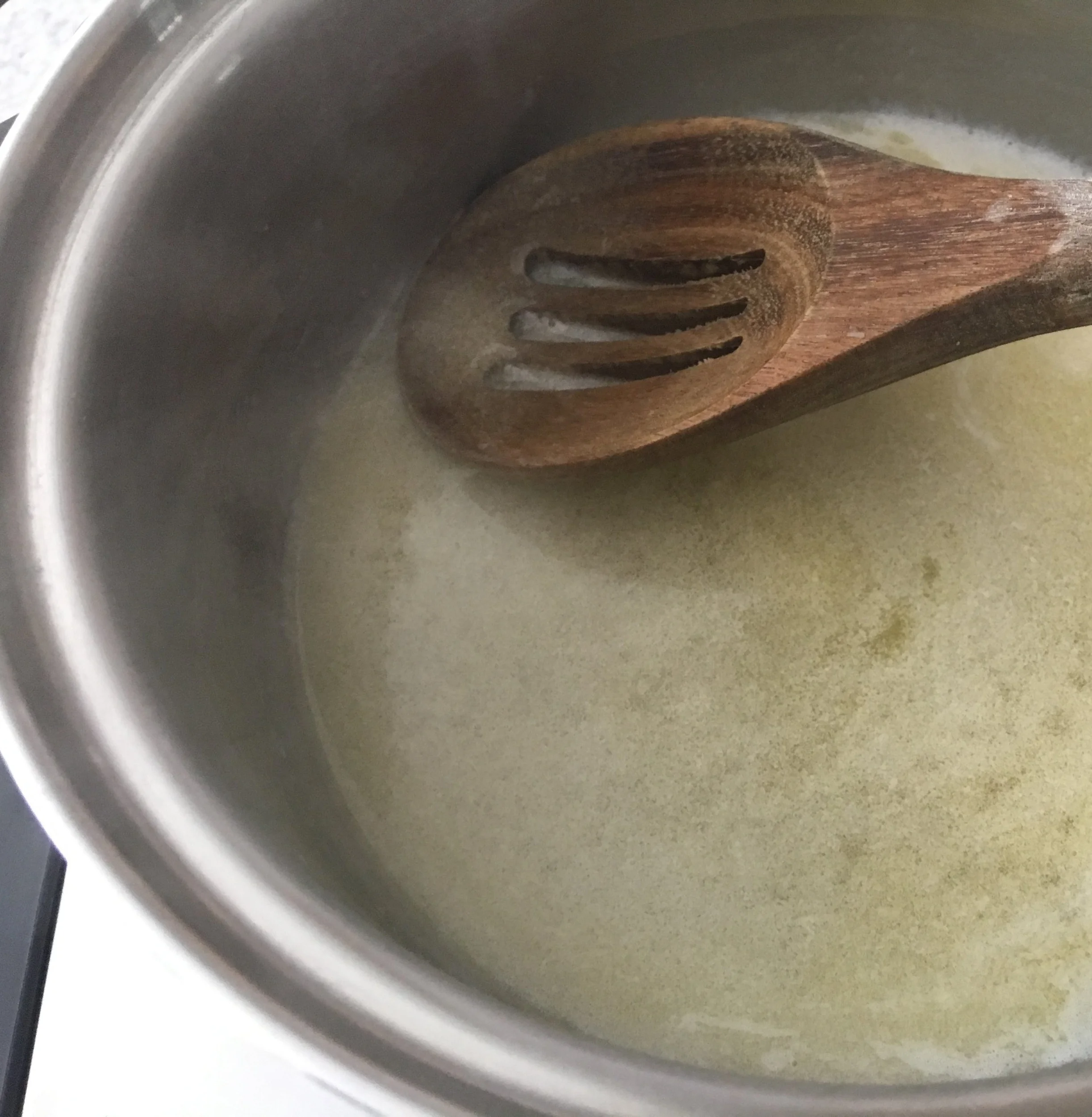
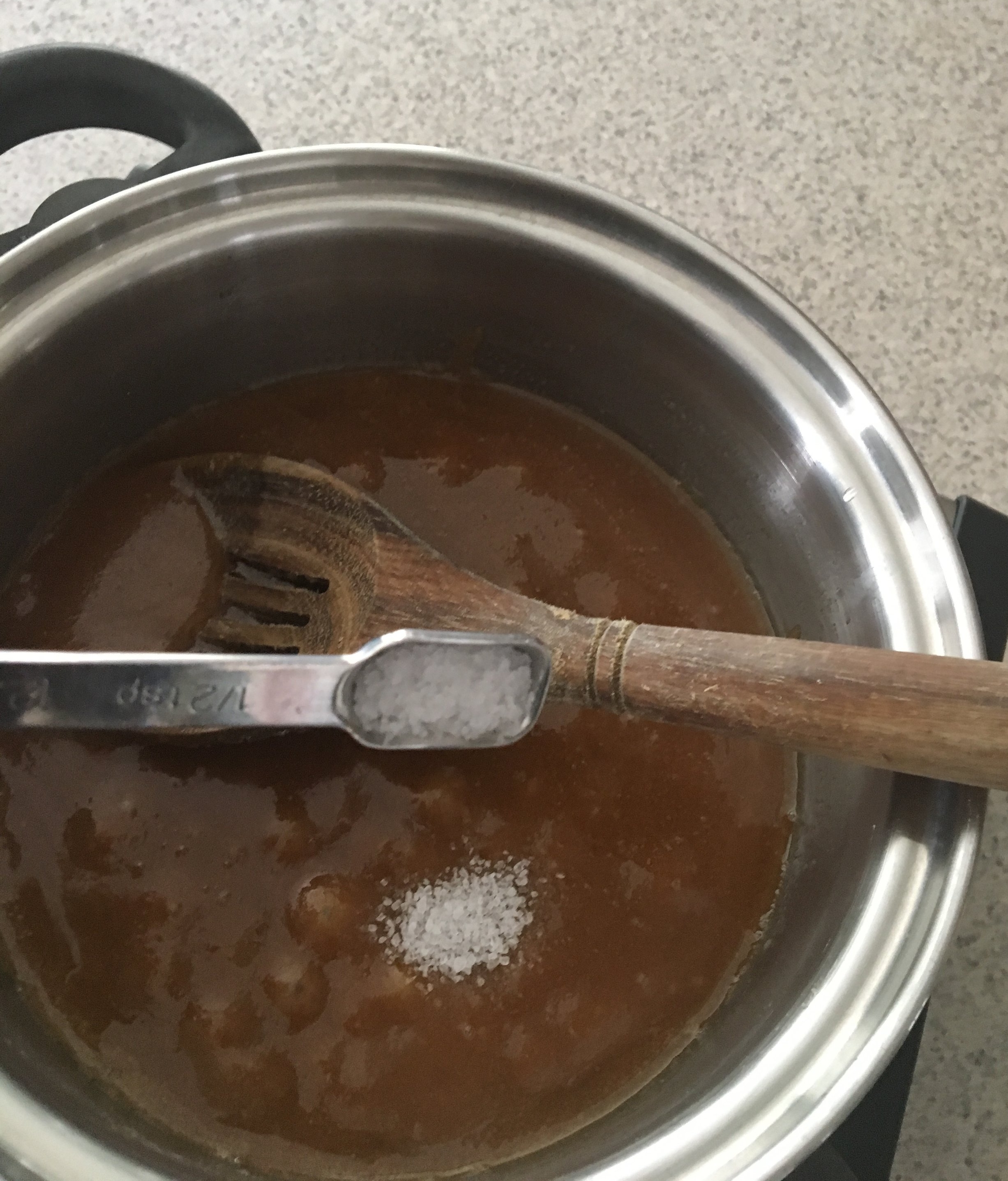
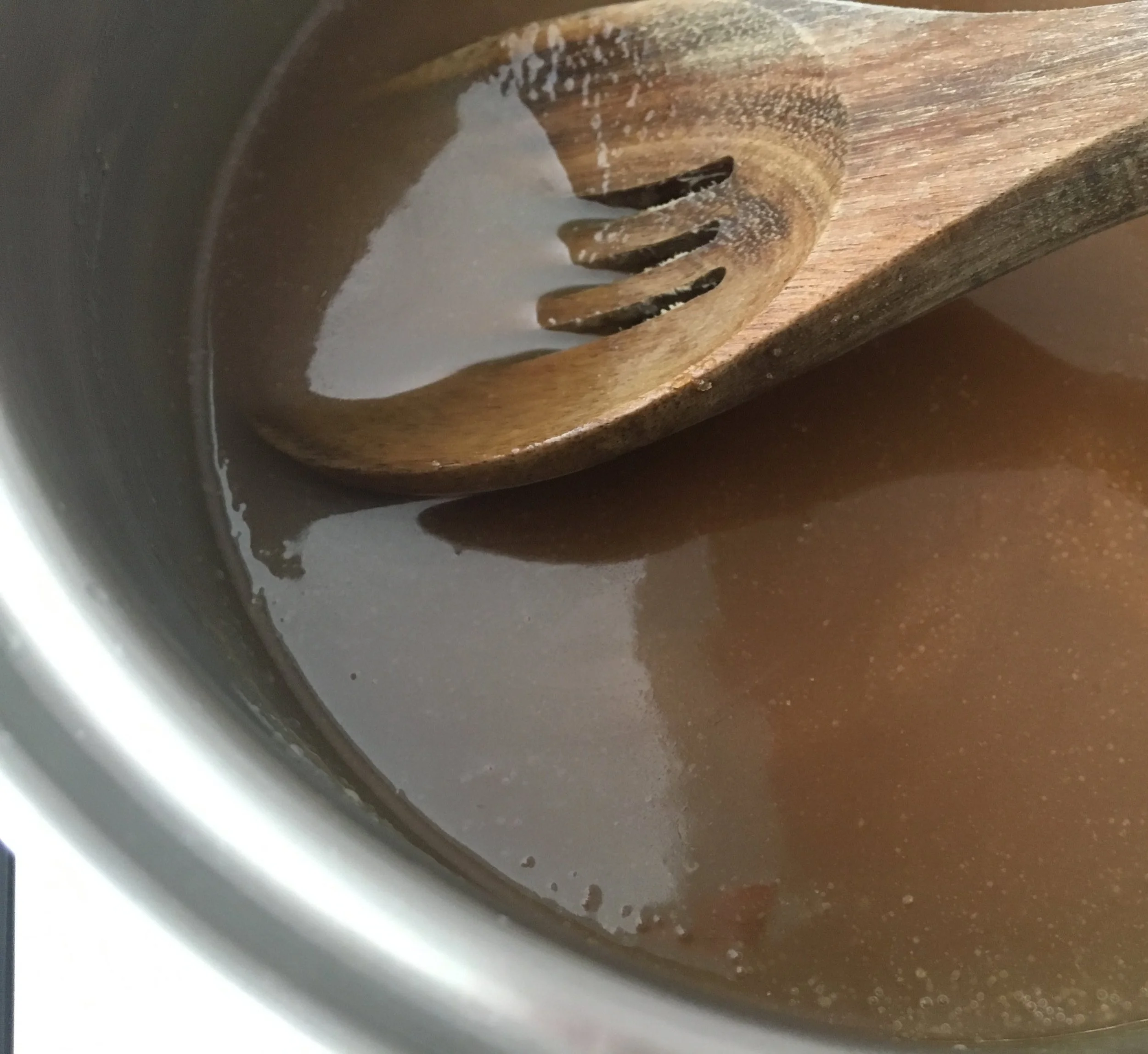
Continue stirring constantly on low until all the sugar has dissolved and you have achieved this rich caramel color and a nutty aroma. Some of the butter may remain on the top. This is okay. It will incorporate once the half and half or cream is added. As the caramel comes to a rolling boil on low, continue rapidly stirring. Add salt and vanilla (or liquor) at this time. If you want salted caramel, then add an additional 1/2 teaspoon (tsp) of salt.
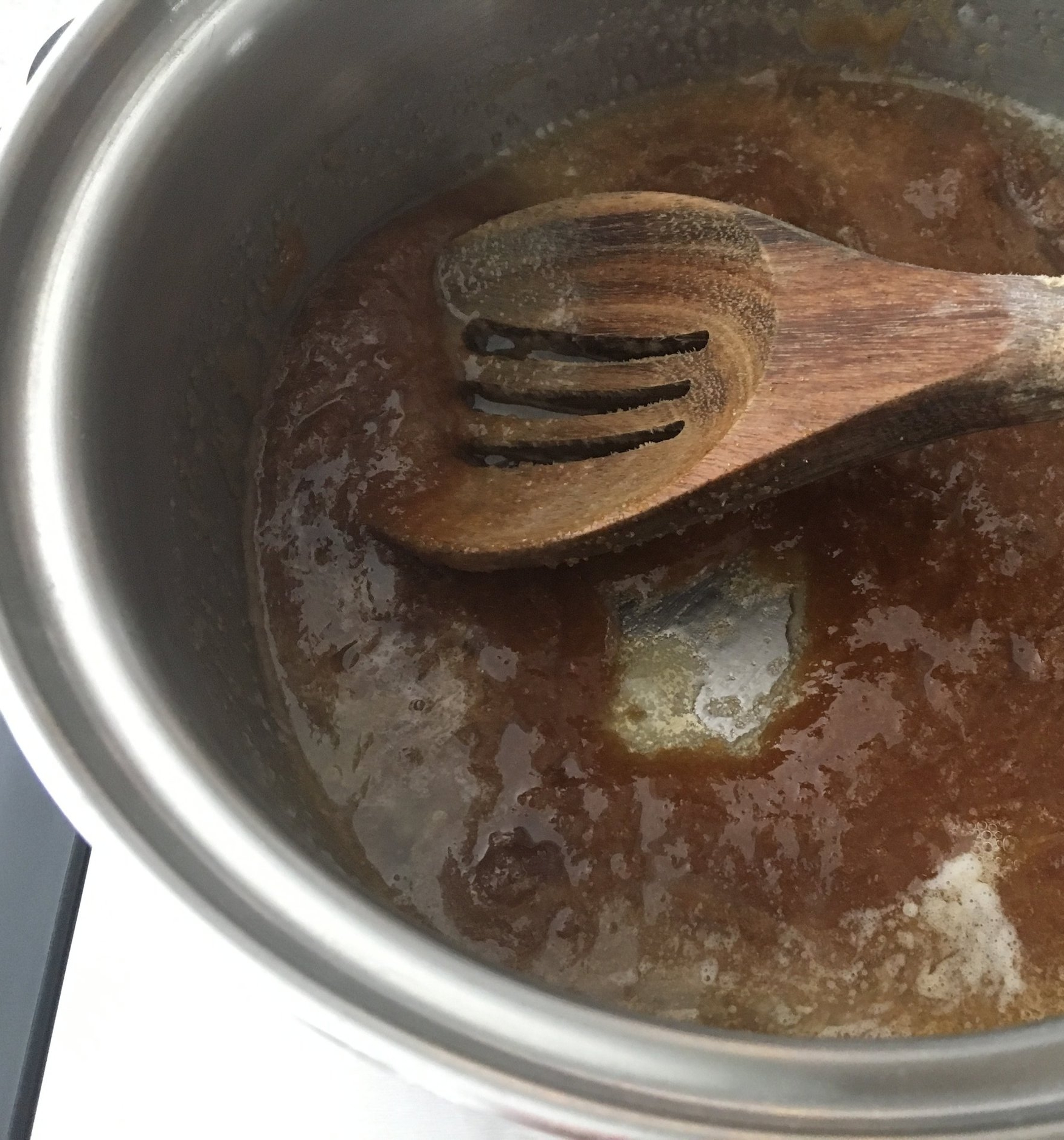
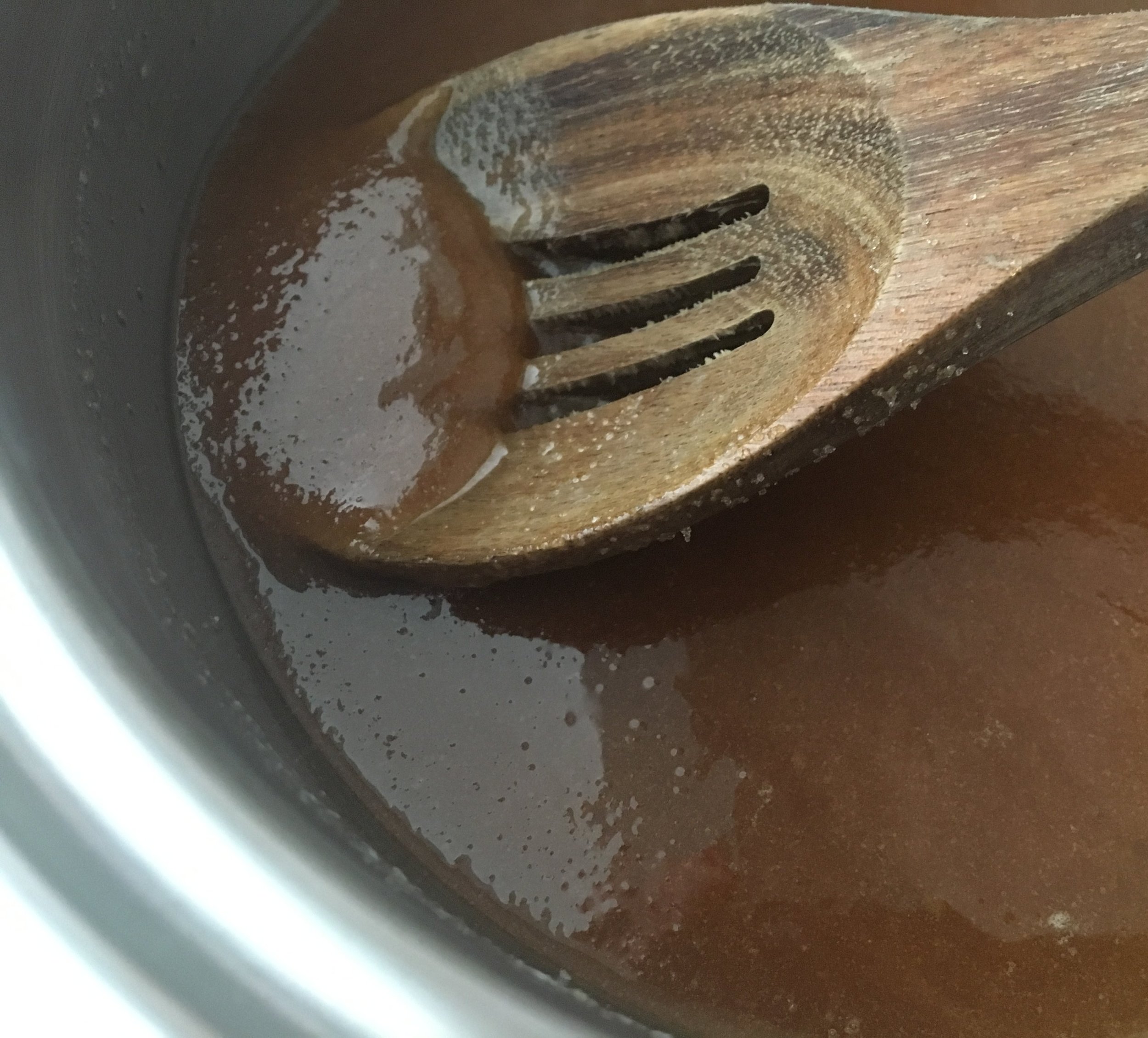
The last part is the cream or half and half. Add the cream slowly and stir stir stir! Again, be careful, this is where the caramel will get angry with you, as it will sputter and possibly throw molten sugar your way. You must prevail. I’m teasing… it really is very easy! Simply continue stirring rapidly until all the ingredients are incorporated. Remove the caramel from the heat and allow to cool. Turn off the stove. The caramel will thicken as it cools.
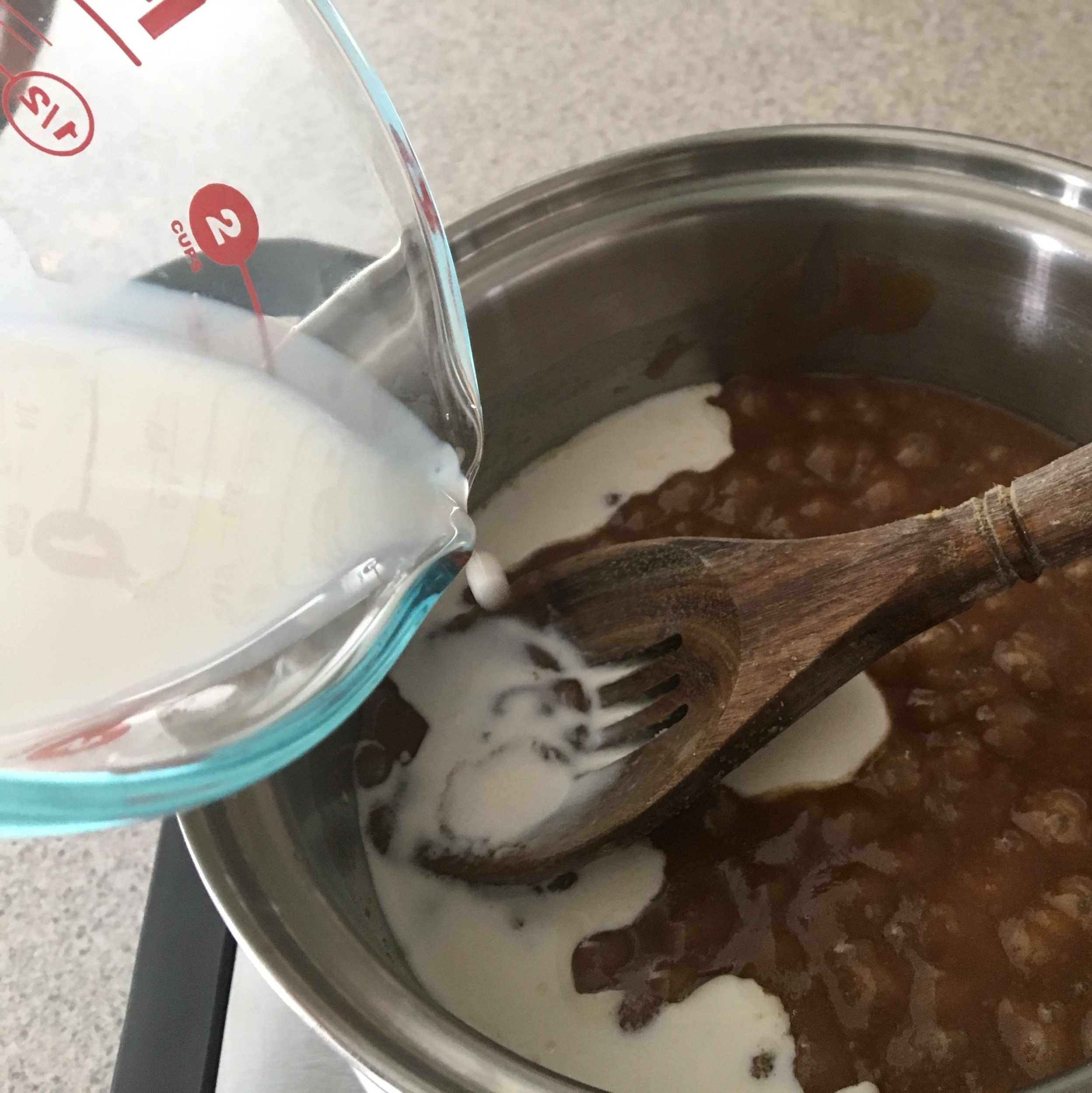
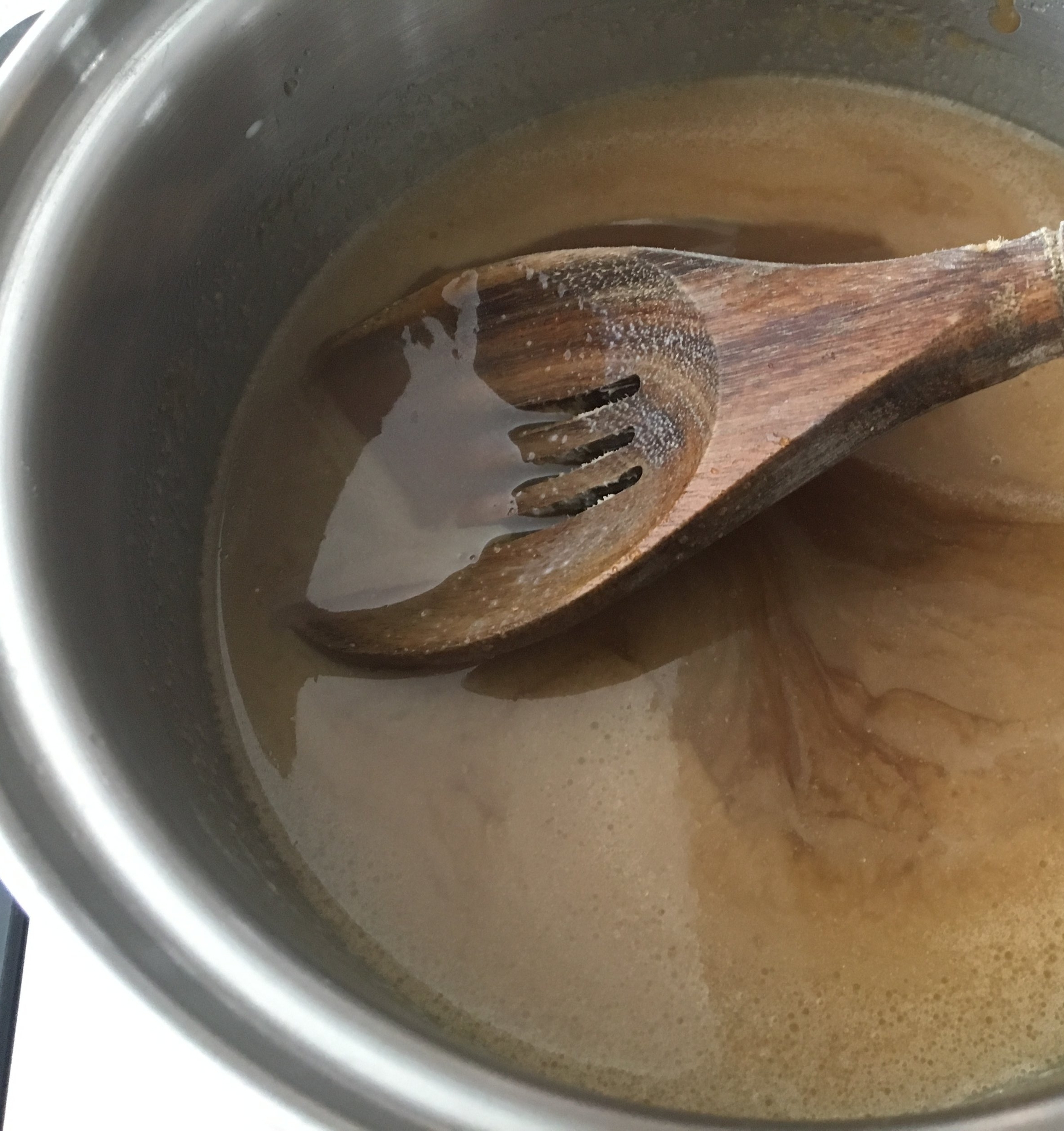
Look at that! Creamy, dreamy, homemade caramel sauce! You may never buy store-bought caramel again. Stay tuned below for our favorite uses for caramel.
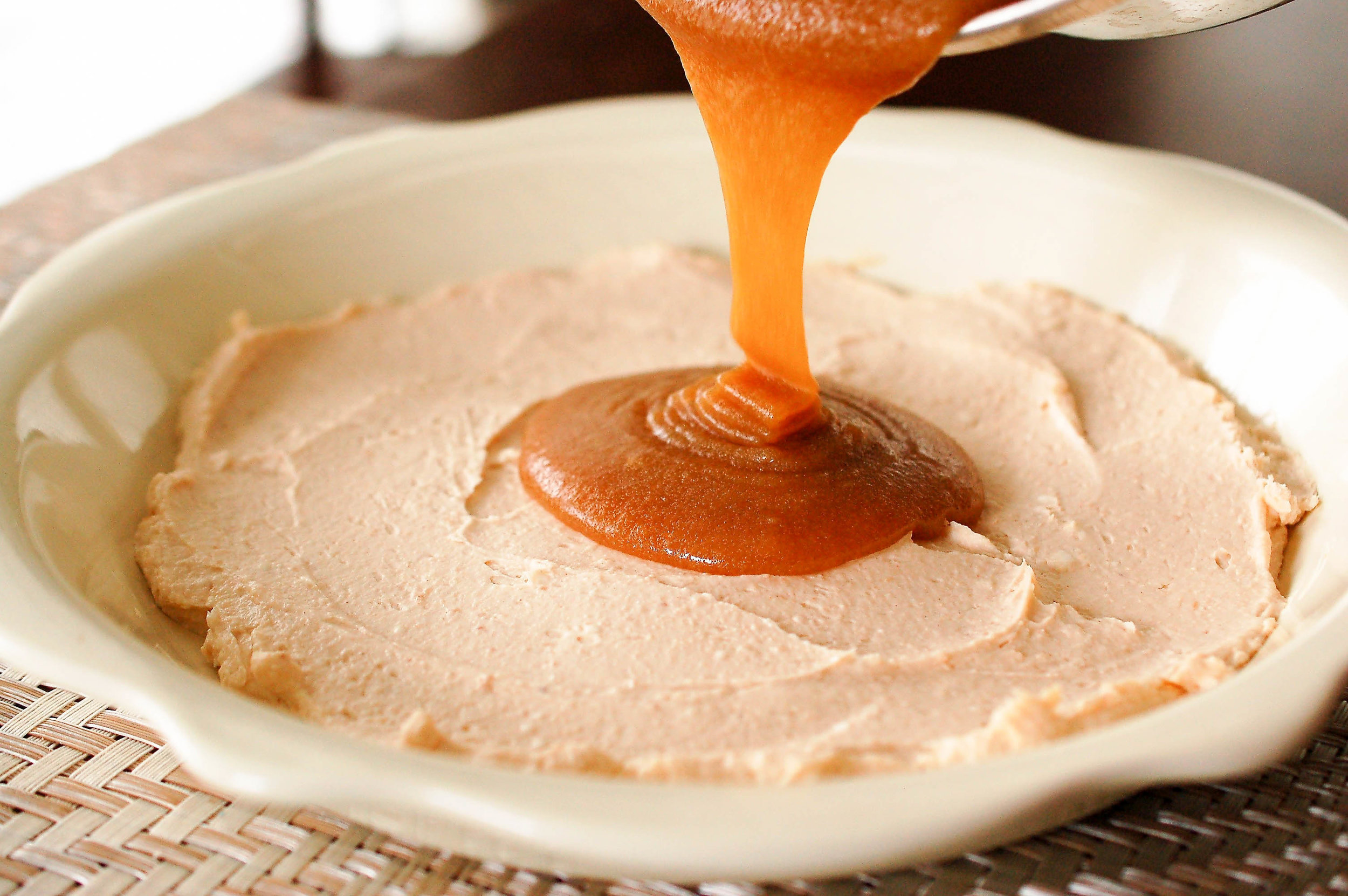
apple butter dip9.jpg

What To Do With Caramel Sauce/Dip

So now that you have made a deliciously decadent caramel sauce, what the heck do you do with it, right? Here are some of our favorite tips:

  • Top your favorite cake, pie, or tart with a generous drizzle of caramel.

  • Pour over popcorn and enjoy a sweet treat.

  • Dip apples for a deconstructed caramel apple.

  • Sweeten your coffee with caramel instead of cream and sugar.

  • Add to milkshakes.

  • Rim a mug of hot cocoa for that extra decadent touch.

  • For an adult beverage, rim a martini glass with caramel and serve with your favorite Appletini.

  • Make hot caramel apple cider.

  • Place in a pretty jar, tied with a pretty ribbon and give as a gift to your favorite hostess, teacher, family or friend.

  • Bake with Brie and nuts and serve with apples for a festive appetizer or dessert.

  • Make it savory! Mix with fish sauce and a few other ingredients for flavorful Vietnamese dishes. Food and Wine.

Thank you for stopping by!



Yum

Cooking Tip: How To Make Cake Flour

cooking tipsSheri SpalloneComment
Cooking Tip: How to Make Cake Flour*

Cooking Tip: How to Make Cake Flour*

Over the years, I have learned the value of "mise en place" (A French culinary phrase which means "putting in place" or "everything in its place"), but to be honest, cake flour is an ingredient I do not often have on hand...or do I? 

I am always amazed at the resources available online these days for everything, including how to make cake flour!  (Am I the only one who remembers encyclopedias and going to the library to research something?  I guess I am dating myself;)  Ok, I digress;)

Making cake flour (a necessary ingredient, in my opinion, for making light, tender cakes and other baked goods) is super simple and uses only two ingredients: all-purpose flour, and cornstarch. 

So, here is how it is done:  For every cup of flour required for a recipe, remove 2 Tablespoons (Tbsp.) of flour and add back in the same amount of cornstarch.  Here's a post by http://www.thegraciouswife.com/cake-flour-substitute/, which gives a nice breakdown of the conversions.

  • 1 cup of cake flour, remove 2 tablespoons of all-purpose flour and add 2 tablespoons of cornstarch.
  • 1 1/2 cups of cake flour, remove 3 tablespoons all-purpose flour and add 3 tablespoons of cornstarch.
  • 2 cups of cake flour, remove 4 tablespoons (1/4 cup) of all-purpose flour and add 4 tablespoons of cornstarch.
  • 2 1/2 cups of cake flour, remove 5 tablespoons of all-purpose flour and add 5 tablespoons of cornstarch.
  • 3 cups of cake flour, remove 6 tablespoons of all-purpose flour and add 6 tablespoons of cornstarch.

There you go friends - a clever substitution with ingredients you probably already have on hand, and you will forever have your "mise en place"!

Comment below if you have any questions or tips of your own to share.

Thank you for stopping by!  Come back and revisit us :)
Happy Baking!

*A huge shout out and thank you to my dear friend Elliot from Bakin' Whoopie in Maryland for sharing this fabulous picture (I am pretty sure she knows how to make cake flour;), and to her Photographer, Mary Gardella (www.marygardella.com), also in Maryland, for capturing this playful side of Elliot.  Thank you ladies!


Yum

Cooking Tip- How To Make Sauerkraut in Mason Jars

cooking tipsSheri SpalloneComment
Cooking Tip: How To Make Sauerkraut in Mason Jars

Cooking Tip: How To Make Sauerkraut in Mason Jars

Are you ever curious about how things are made? Take sauerkraut, for example, with cabbage, salt, maybe some spices, a closed container, and a little patience, and within a few days, the cabbage has transformed into sauerkraut, which in German translates to "sour vegetables."  Before we became a society of modern conveniences and processed foods, and before the television, the internet, and social media, our ancestors made everything from scratch with fresh ingredients.  

Making recipes from scratch is super satisfying because you can control the ingredients that go into your recipe, and you can save money in the process.  Sauerkraut is one of those foods I would never think to make from scratch, as the idea always sounded daunting and tedious, but that was until a recent conversation I had with my mom.  We were talking about pork chops and sauerkraut, and Mom interjected, "Your Great Grandmother used to make her sauerkraut from scratch."   Hmmm, game changer!

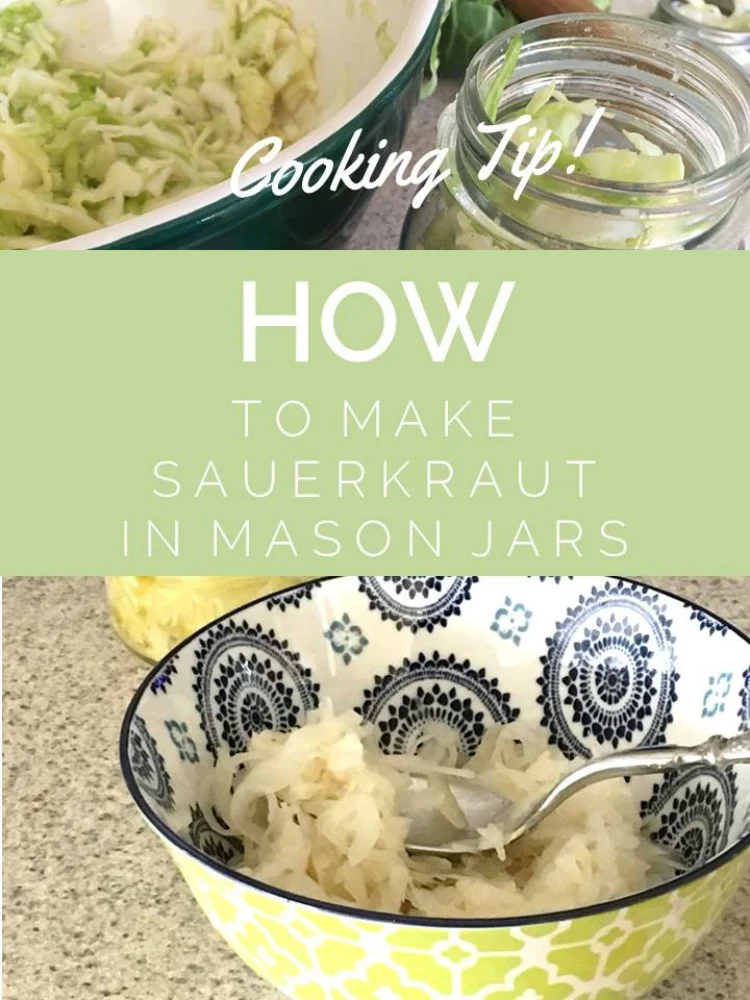
I did a little research and found out that homemade sauerkraut is full of probiotics and healing nutrition. It's a fermented food that is good for your gut! By making your own, you get the benefit of fresh cabbage, full of healthy bacteria, and the satisfaction of homemade food made from scratch! Follow along as I demonstrate how to make simple and easy sauerkraut in a mason jar!

Thanks for stopping by:) Comment below if you have tried this recipe. Return for more family-tested recipesentertaining ideas, and cooking tips using all our favorite Cherchies® gourmet products.

Follow us on social media: FacebookInstagram, and Pinterest.

Ingredients

  • 1 medium head of cabbage

  • 1 1/2 Tablespoons (Tbsp) sea salt, Himalayan, or Kosher salt (do not use table salt)

  • 1 teaspoon (tsp) Cherchies® Garlic Seasoning

Equipment  

  • Sharp knife

  • Cutting board

  • Large mixing bowl

  • 2 (2-quart) mason jars with lids (or fancy "burping tops")

  • Some sort of clean weight (either smaller jelly jars that will fit inside, marbles, or glass weights) to weigh down cabbage under brine

  • Clean towel or cloth for covering

  • Rubber bands (optional)

  • Clean hands and/or a pounding tool

Preparation

Make sure all parts of the process are clean; the utensils, cutting boards, mason jars, knives, hands, weights, etc.   It is best during fermentation to provide the cleanest environment possible to allow good bacteria to thrive.

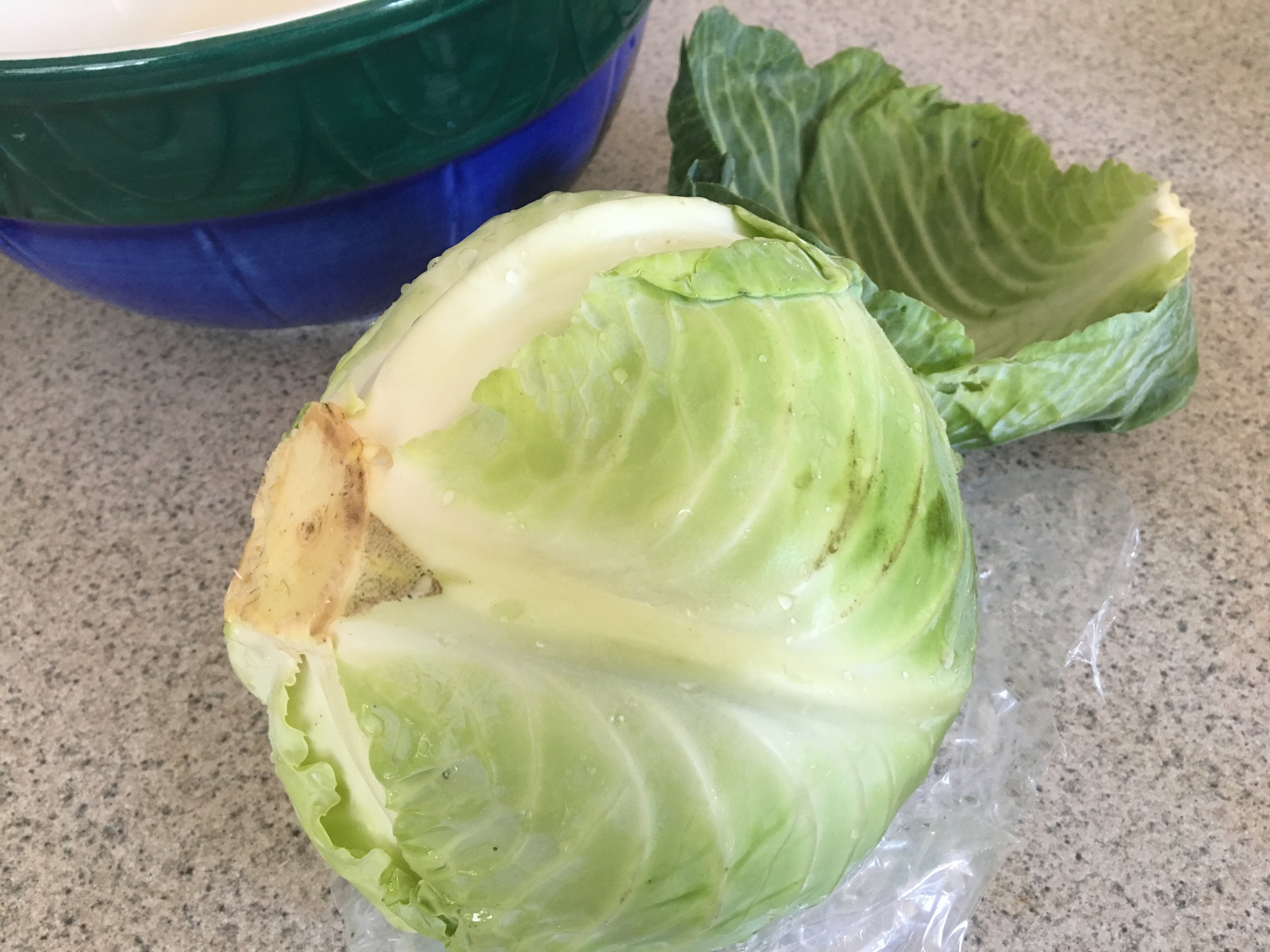
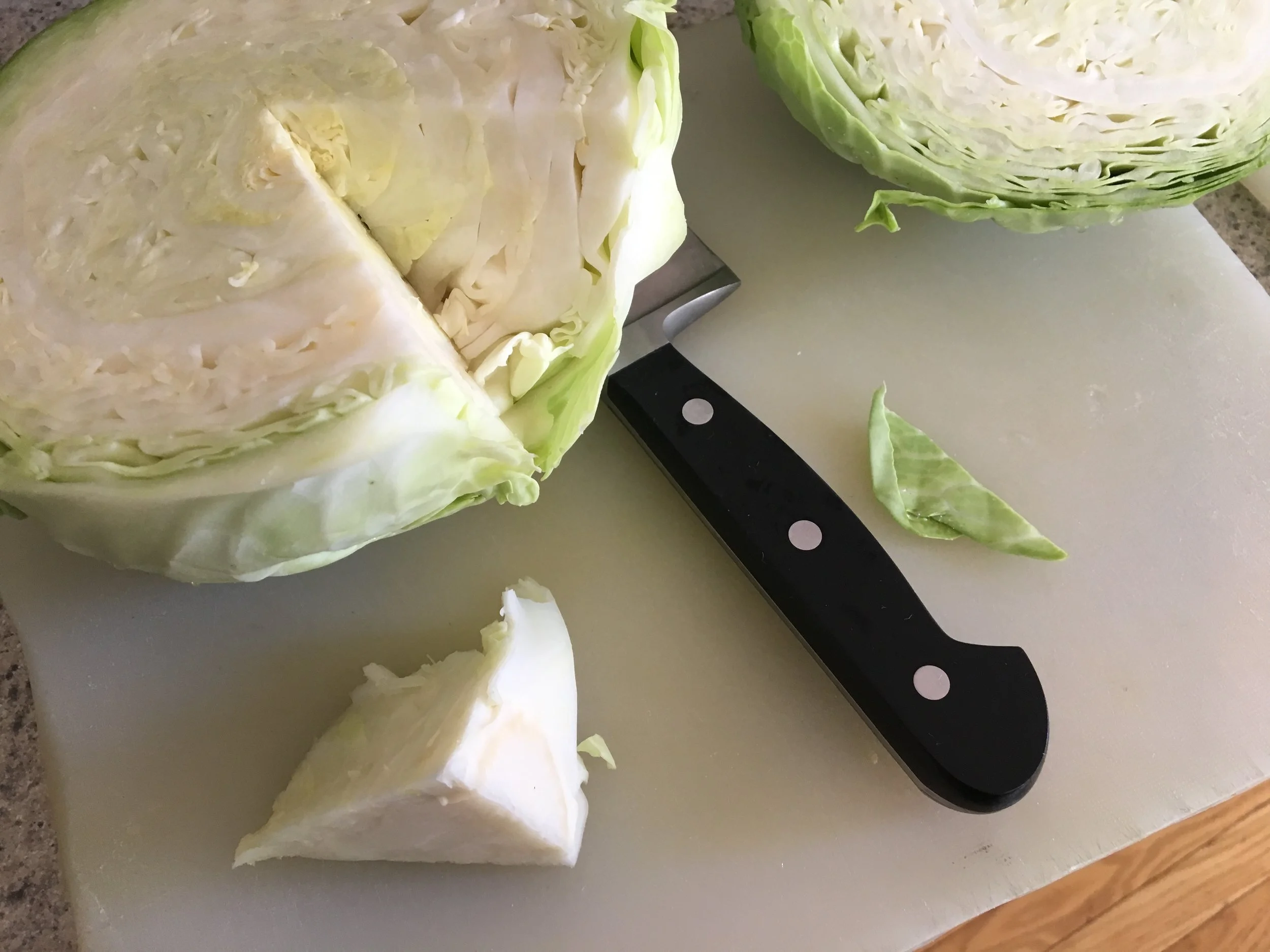
Remove the outer few loose leaves of the cabbage. Cut cabbage in half or quarters, whatever is easiest and remove the core.  

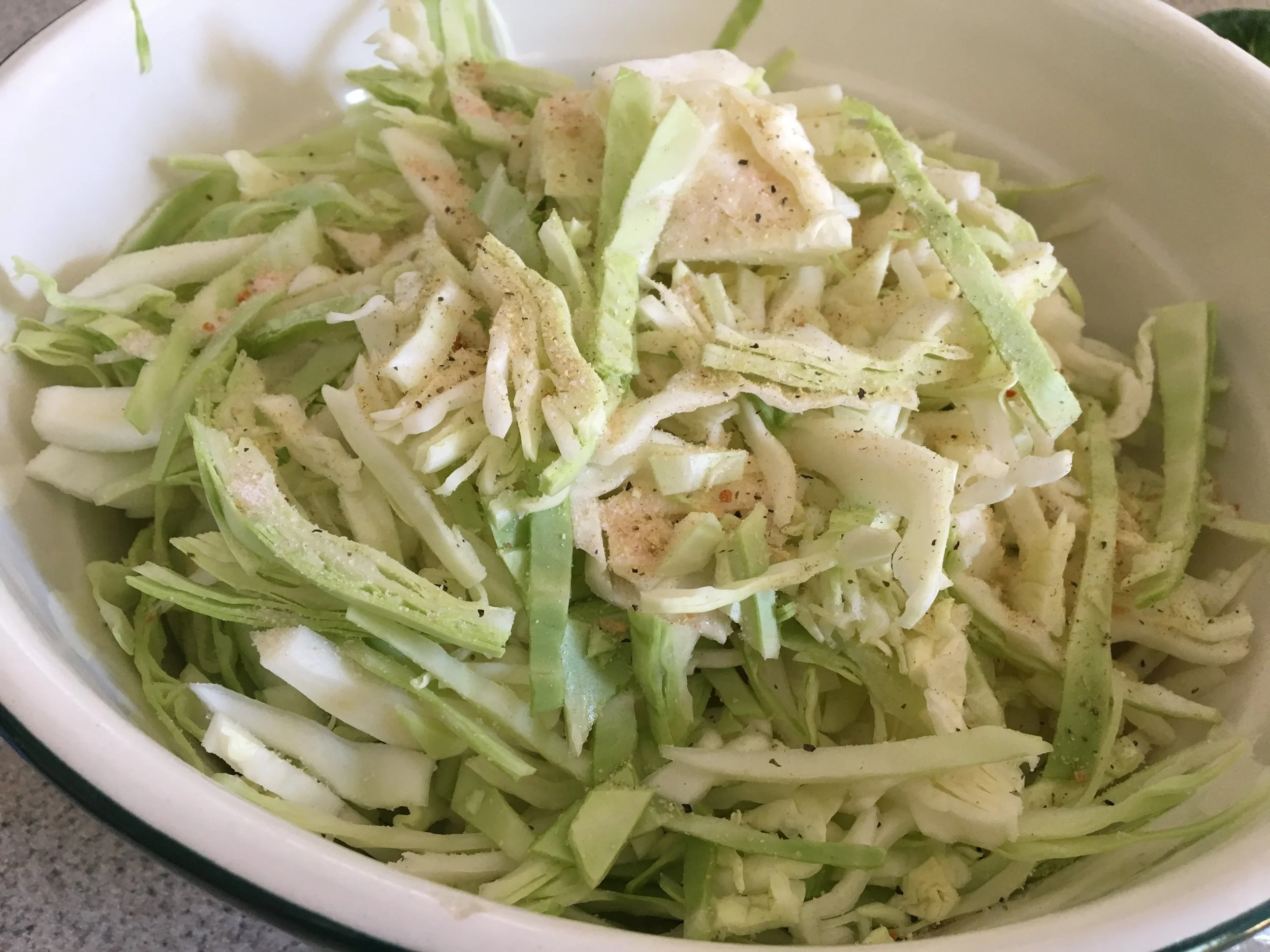
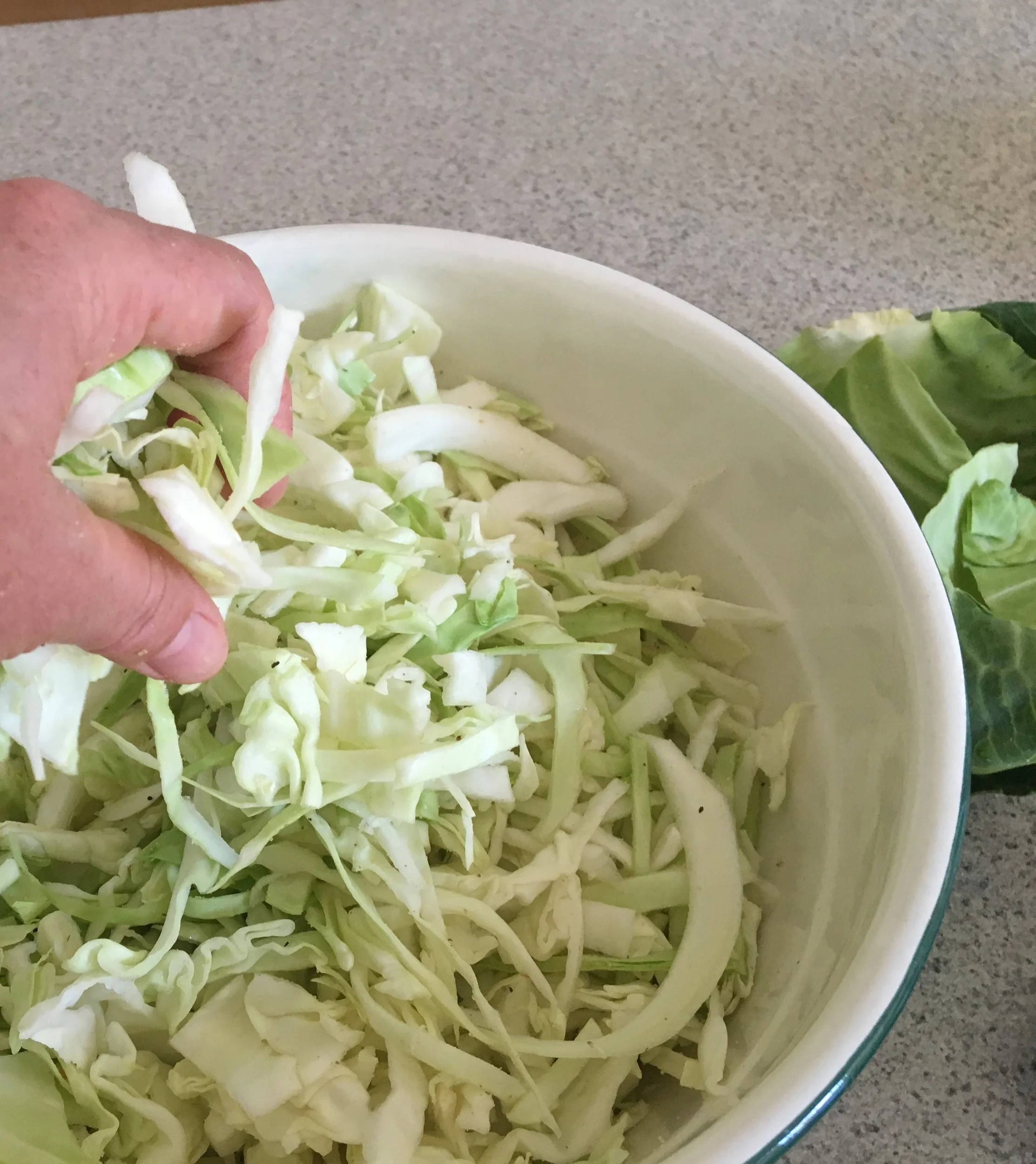
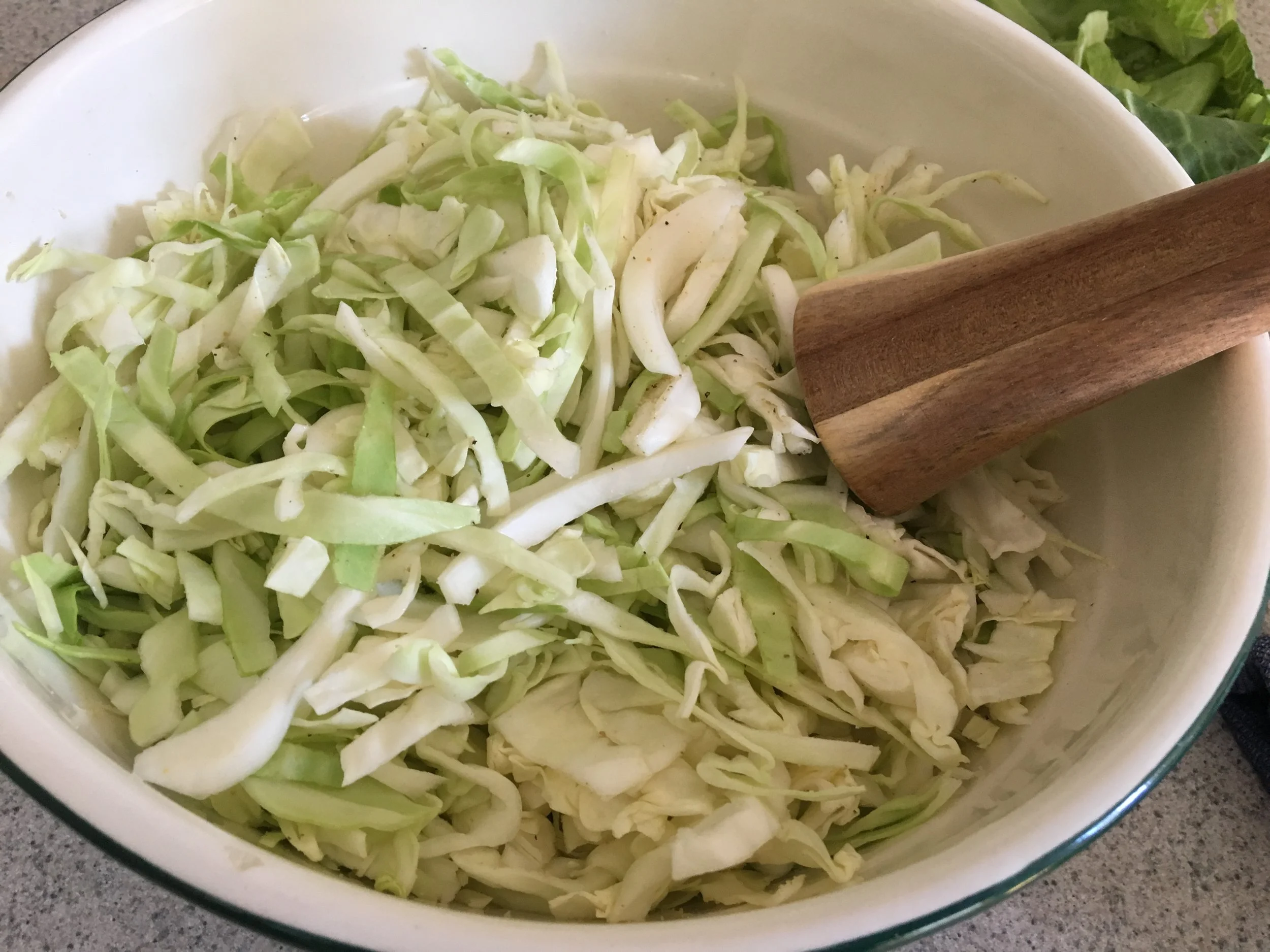
Slice the cabbage into thin shreds (a food processor would work nicely too).  Place cabbage in a large bowl and sprinkle with salt and Cherchies Garlic Seasoning.  Mix with hands to combine, squeezing cabbage to release water.   Work cabbage with this method for a few minutes. 

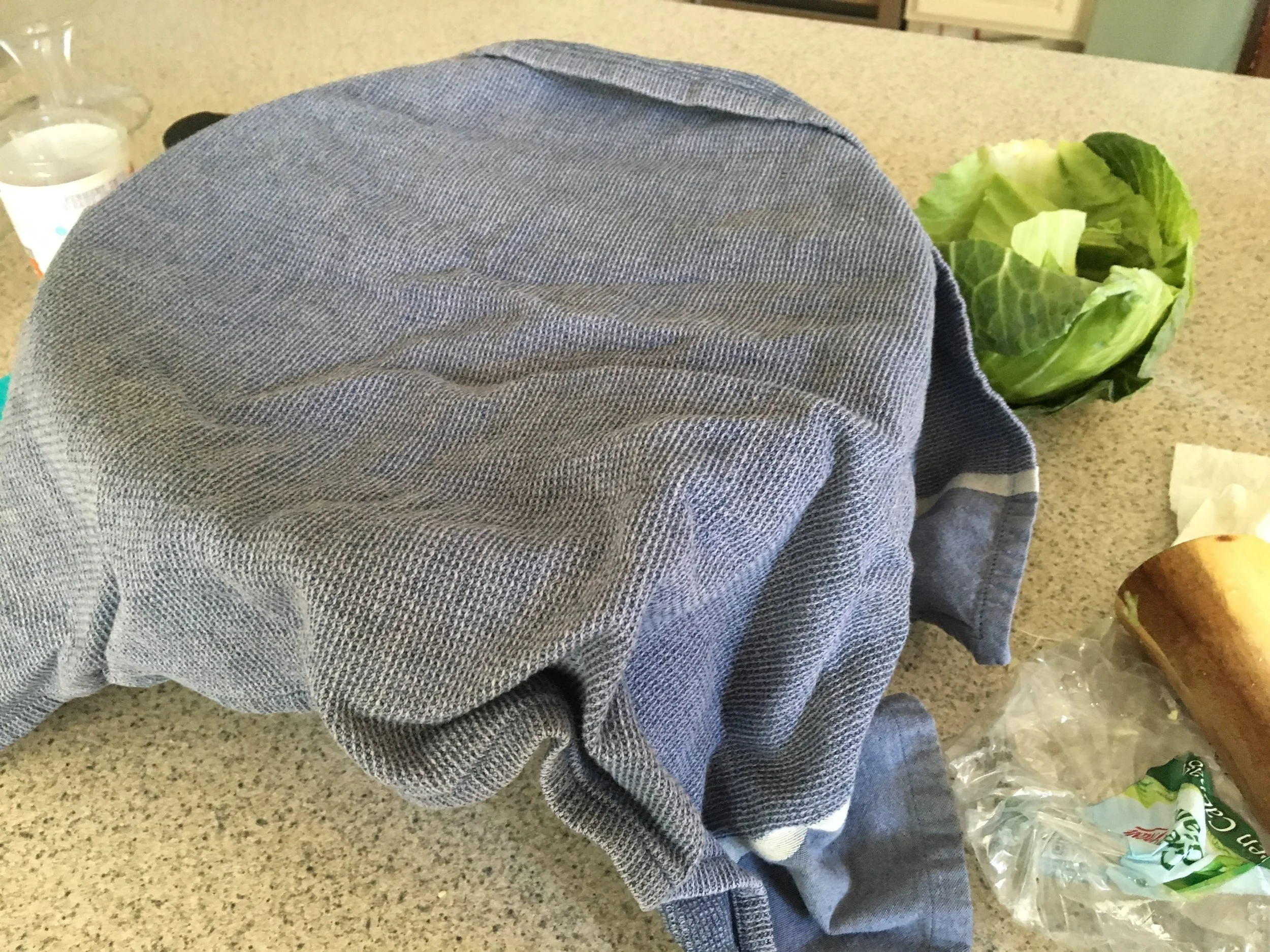
Or, use this handy tool I found online, The Pickle Packer from masontops.com to mash the cabbage and draw out the water.  Either way, cover with a clean cloth and set aside and cover for a couple of hours (more water will be removed the longer it is left out).  Salt will begin to react with cabbage, releasing the water from the cabbage and starting the fermentation process.   

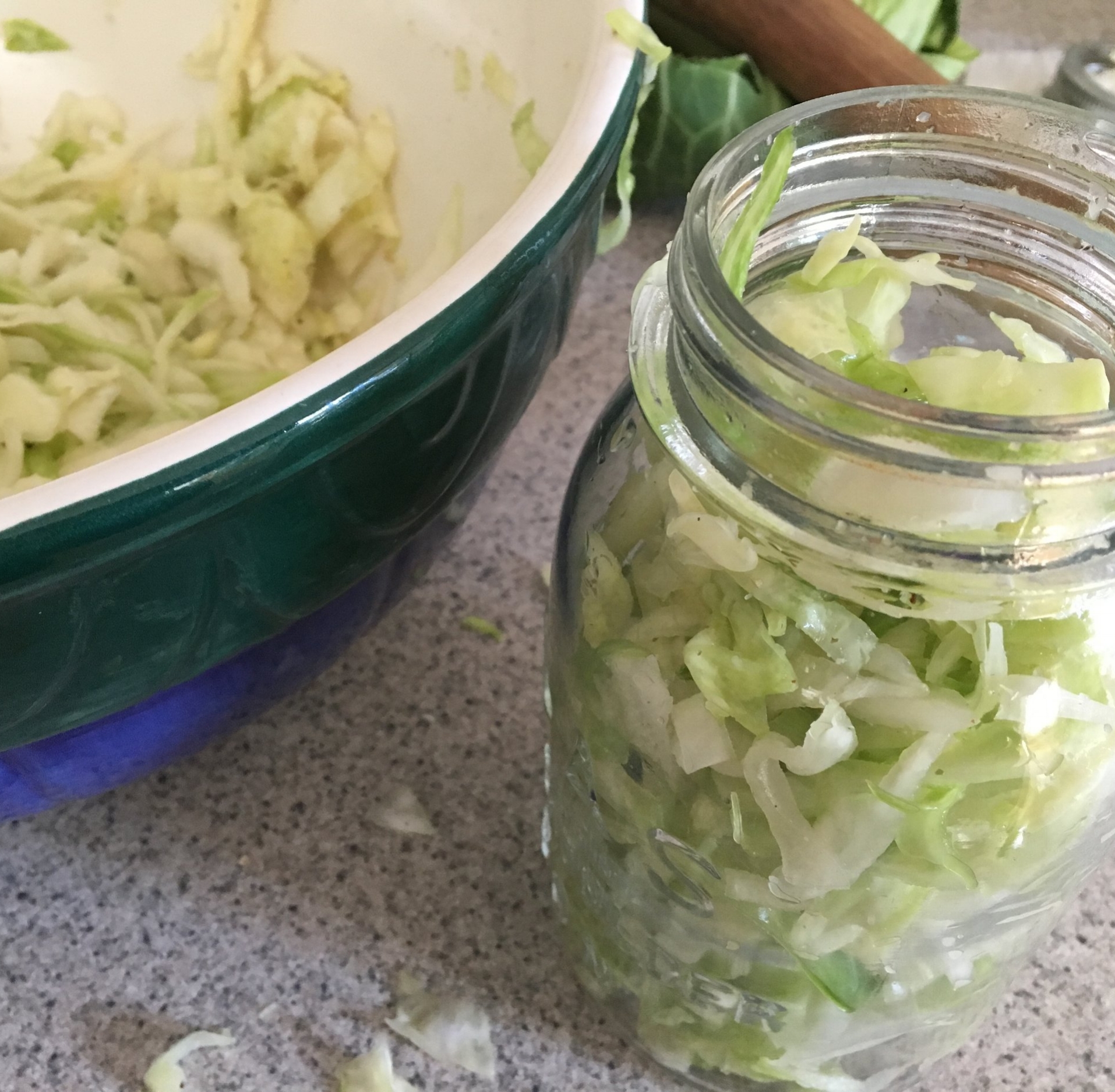
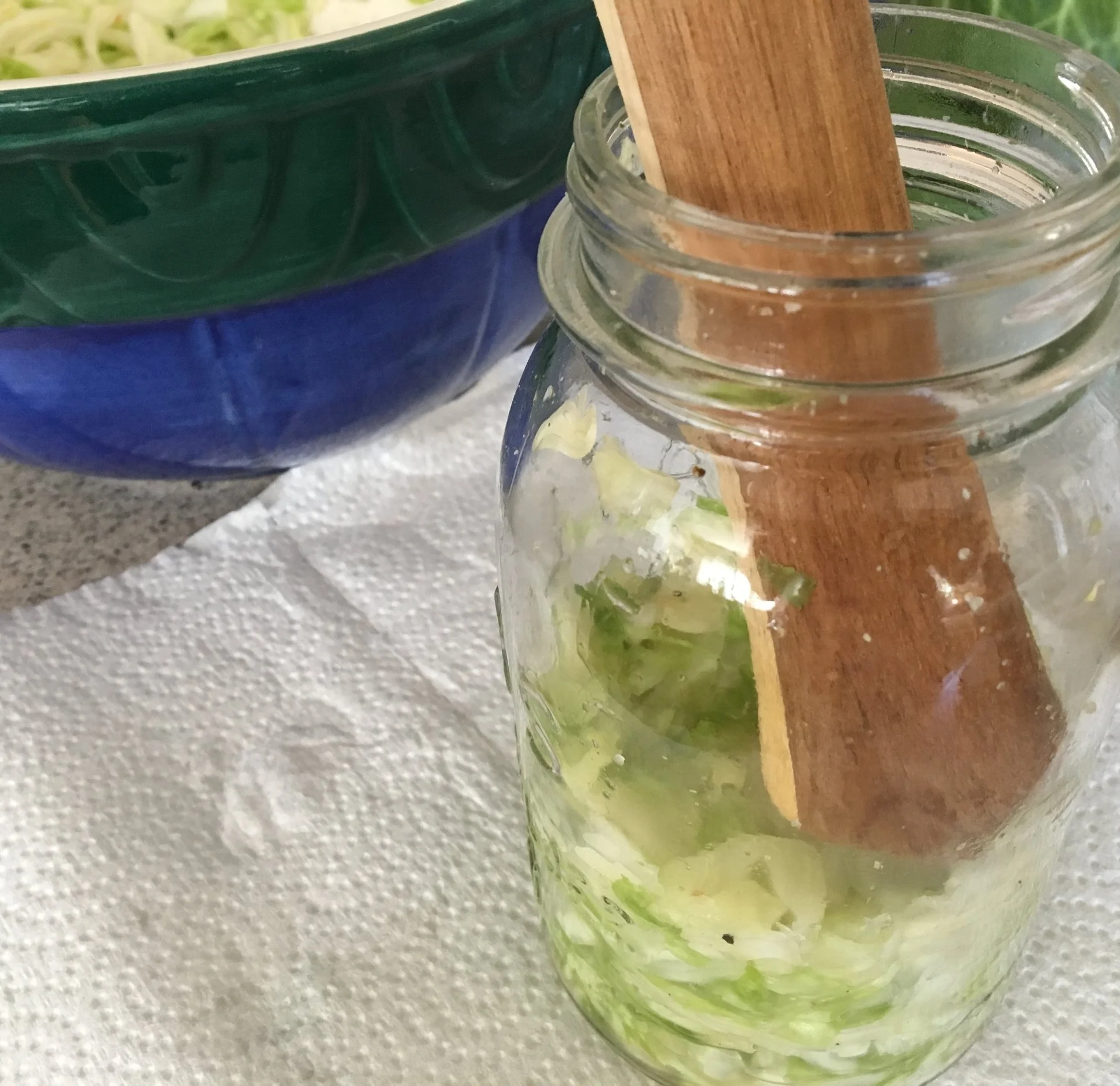
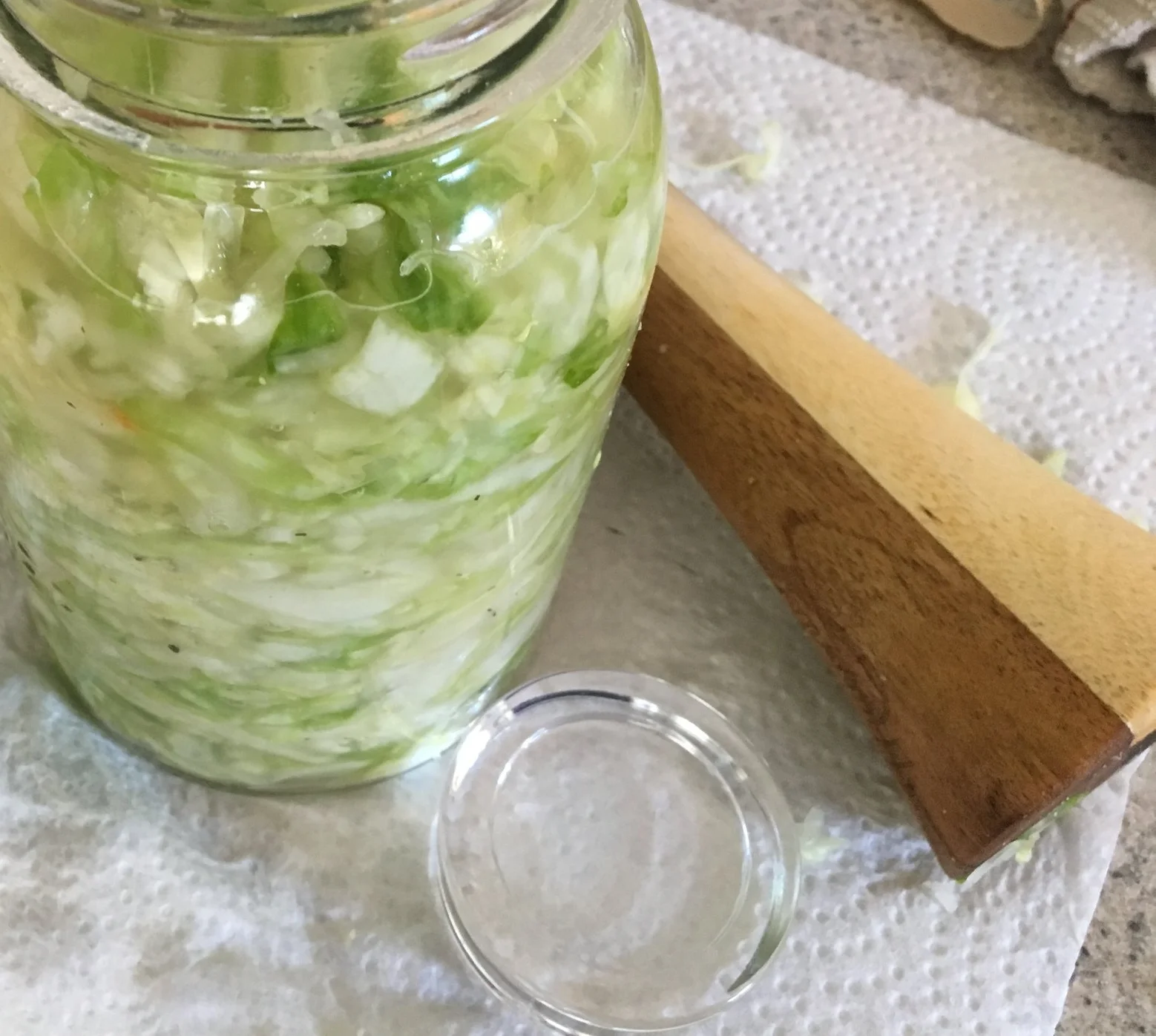
After a couple of hours, add handfuls of cabbage mixture to mason jar (s).  Pack down with hand, spoon, any kitchen instrument with a dull end, or The Pickle Packer from www.masontops.com.  I stumbled across this company while searching for how to make sauerkraut.  I am all about ease, and this tool is pretty cool.  The goal is to pack the cabbage ultra-tight and let it soak in its brine.  The cabbage should be under the brine during fermentation.

You will need some sort of weight for this step; a smaller glass jelly jar that fits inside the mason jar, marbles, or these helpful glass weights I found at masontops.com.

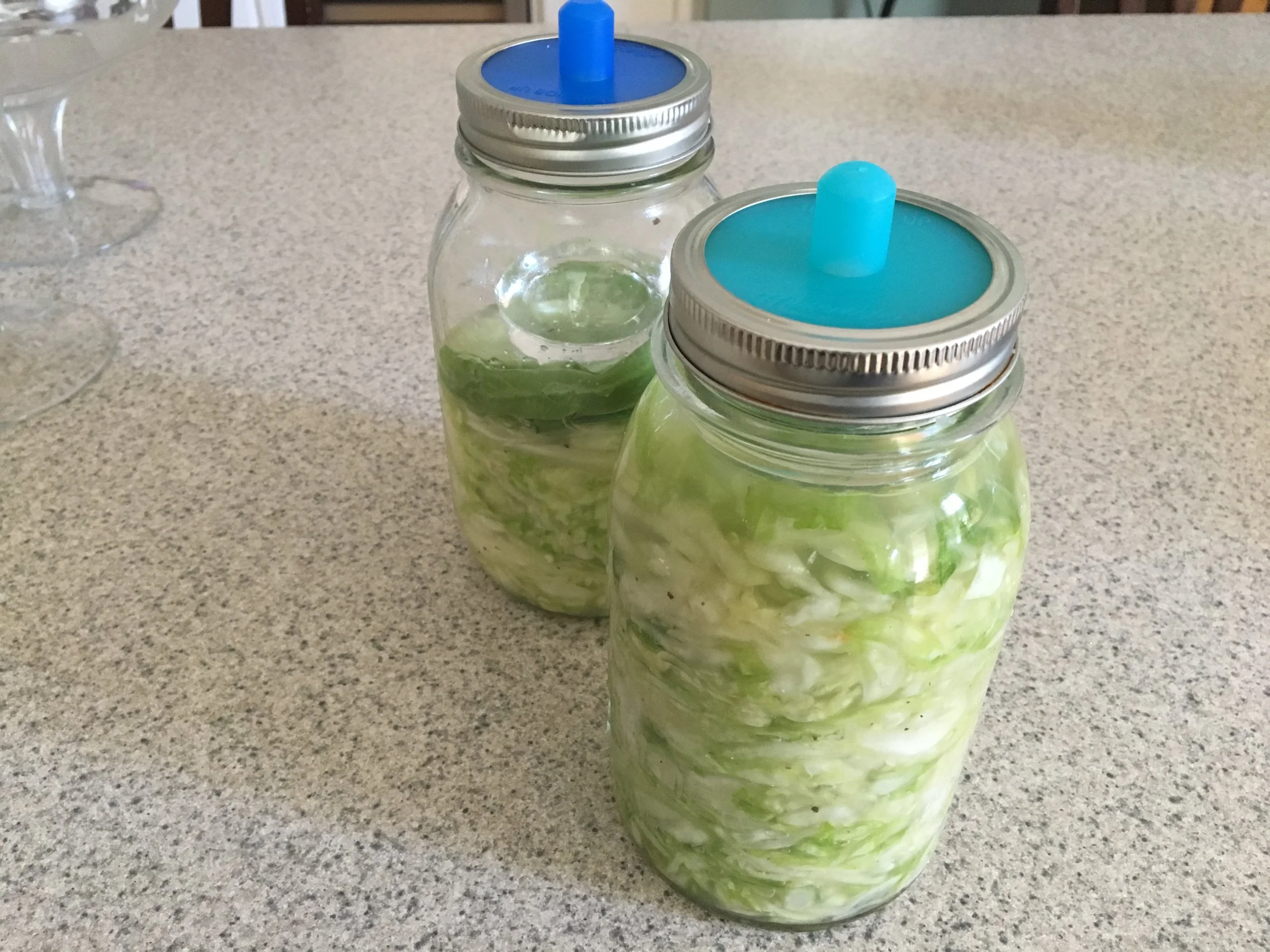
Once the jar is filled (leave about an inch from the top), place your weight on top of the cabbage, making sure to submerge the cabbage under the brine.  Some folks have recommend using the discarded cabbage leaves to cover the mixture and then place weights on top of the leaves.  (I only did this for one jar.  I must have had a larger cabbage then normal this time and had extras left over). 

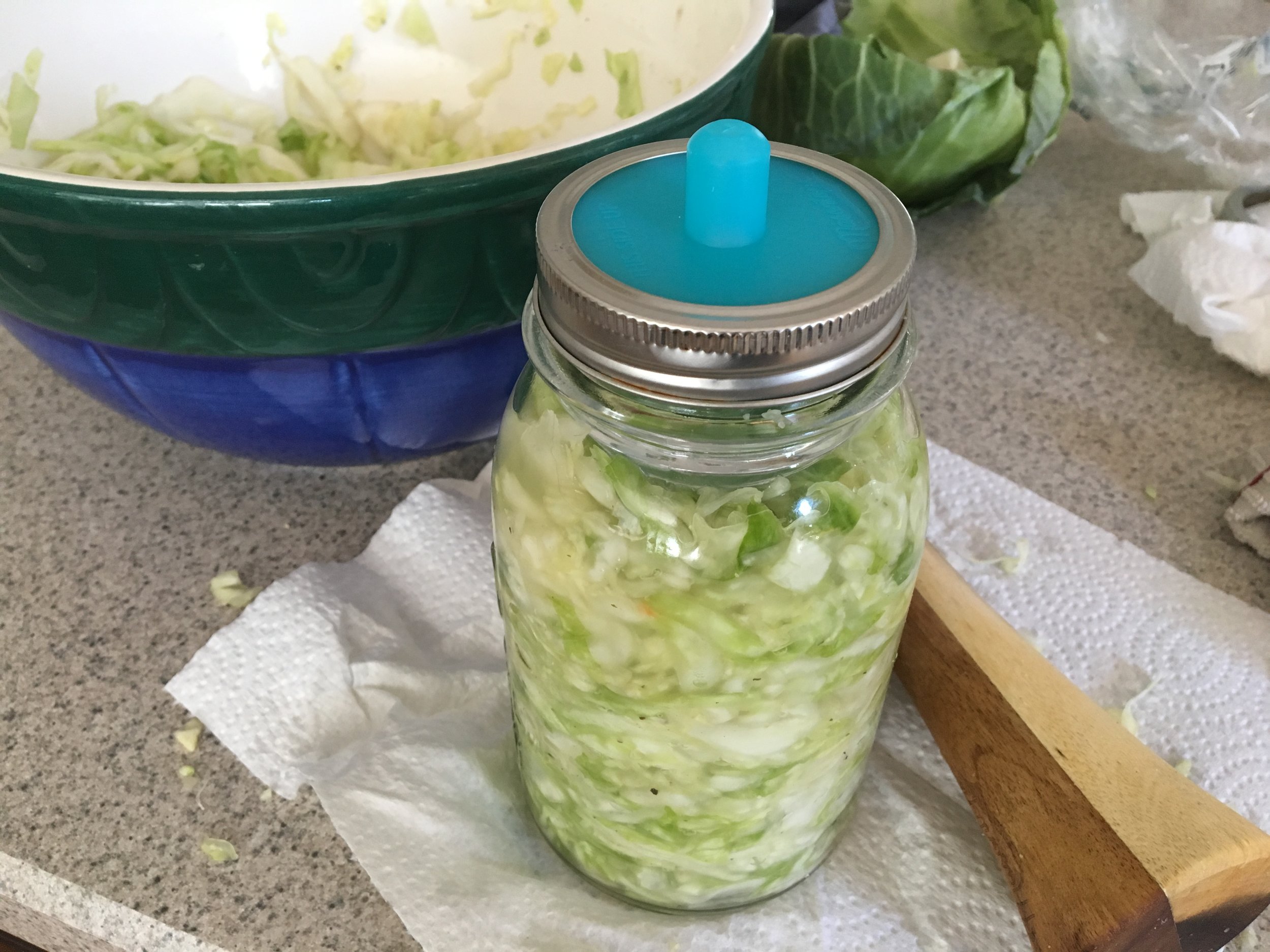
If you need to add a small amount of filtered water to brine to ensure cabbage is submerged, do so at this time.  Seal up your mason jar with either a clean cloth and rubber band (this will allow your cabbage to breathe, a canning lid, or a canning lid with one of these "burping" attachments that I also found at masontops.com.  If you use only a canning lid, you will will need to manually "burp" the sauerkraut daily (to release the built up gases) by opening the lid slightly to allow the air to escape.

Leave the sealed sauerkraut on the counter for 3-10 days depending on desired tanginess.  You will begin to see bubbles form after a couple of days.  (Taste sauerkraut as you go along).  Make sure the cabbage stays below the brine line or you may experience some discoloration, which you can easily remove.   After a couple of days you may need to pack down a little further.  I did this so as to keep the cabbage below the brine.  

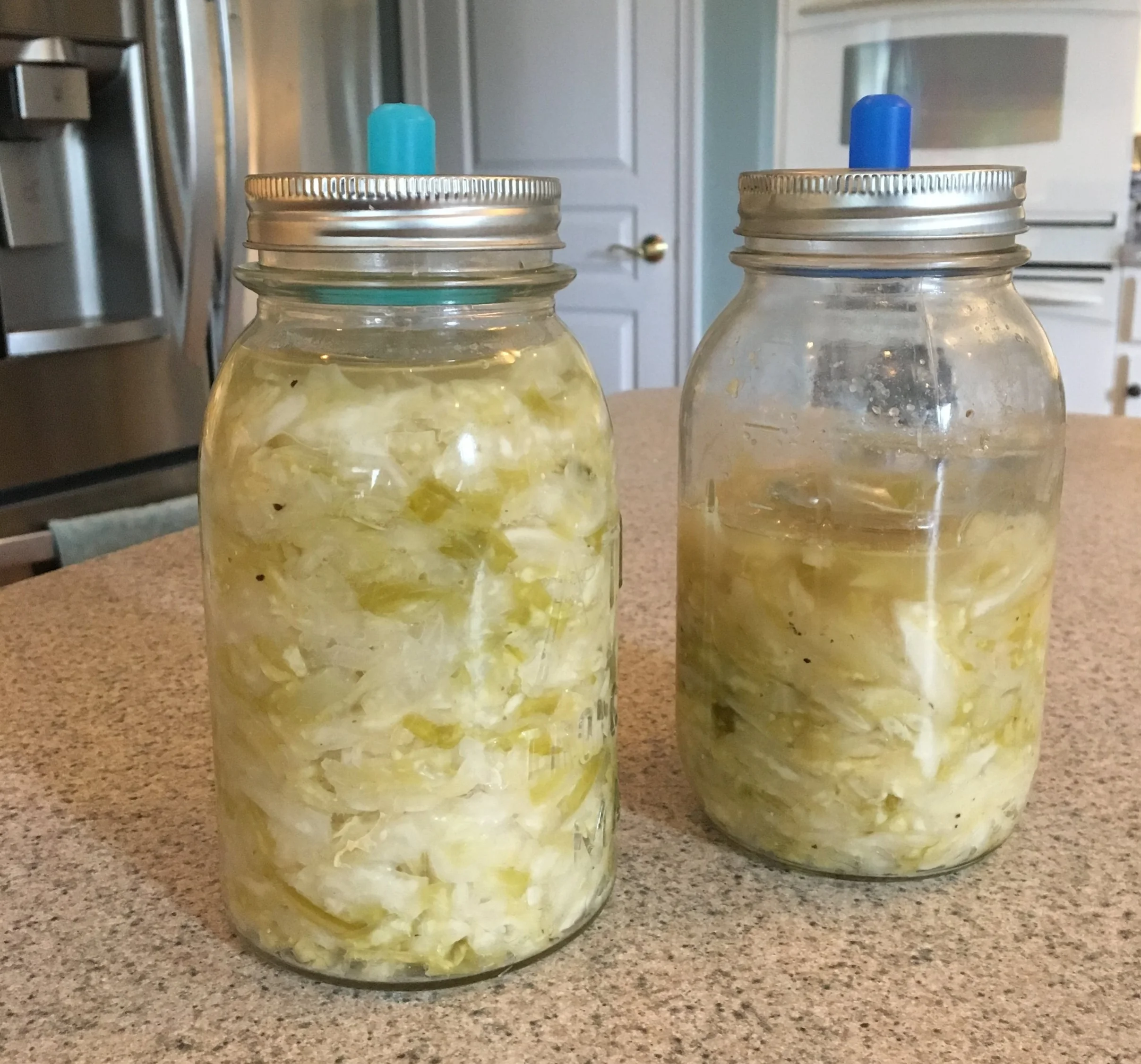
Once the sauerkraut has reached desired consistency (sour), transfer the jar to the refrigerator.  The sauerkraut will continue to ferment, but at a slower rate.  If using a "burping lid", you can replace it with a regular canning lid at this point.  You can enjoy the sauerkraut right from the jar immediately. 


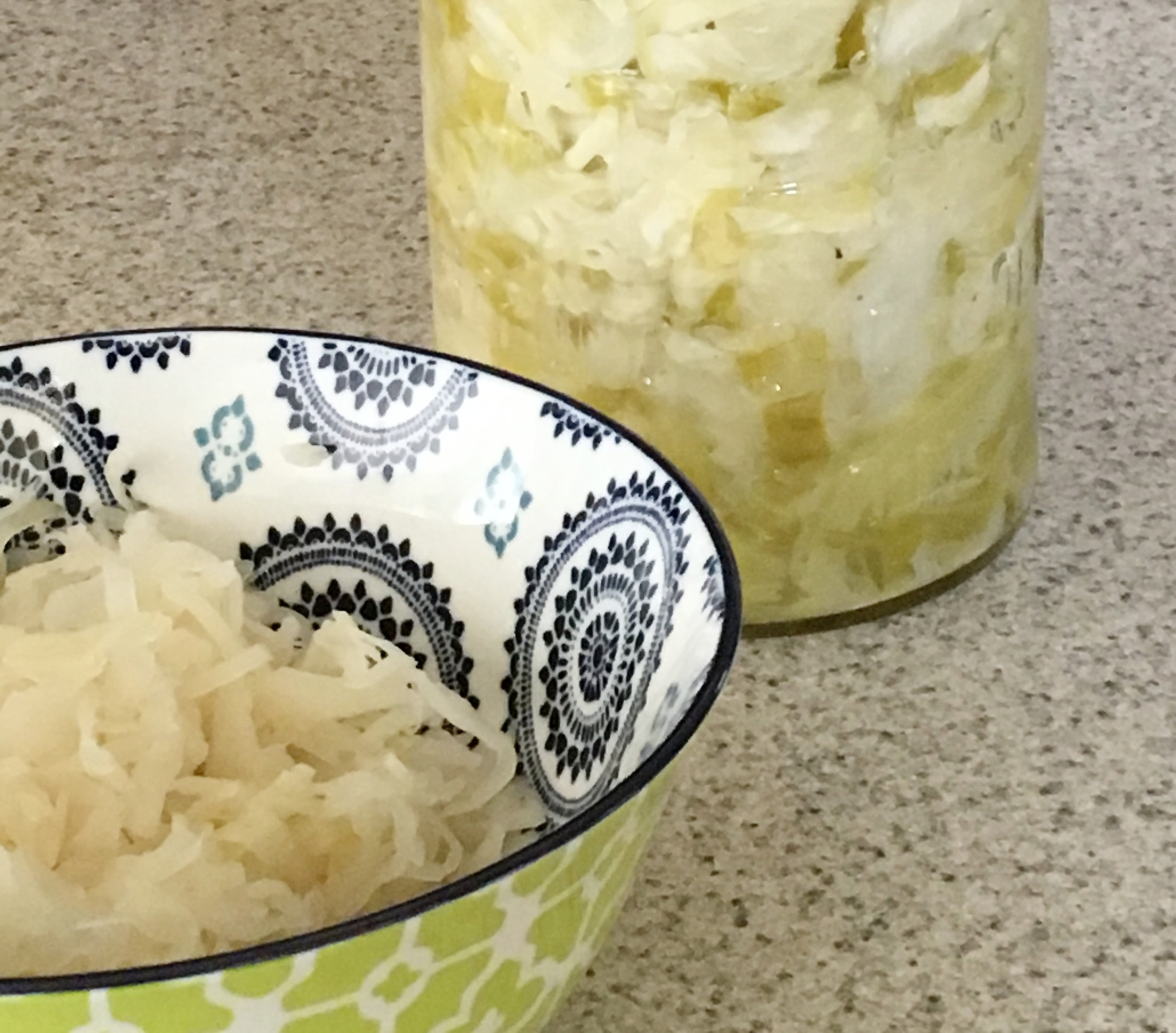
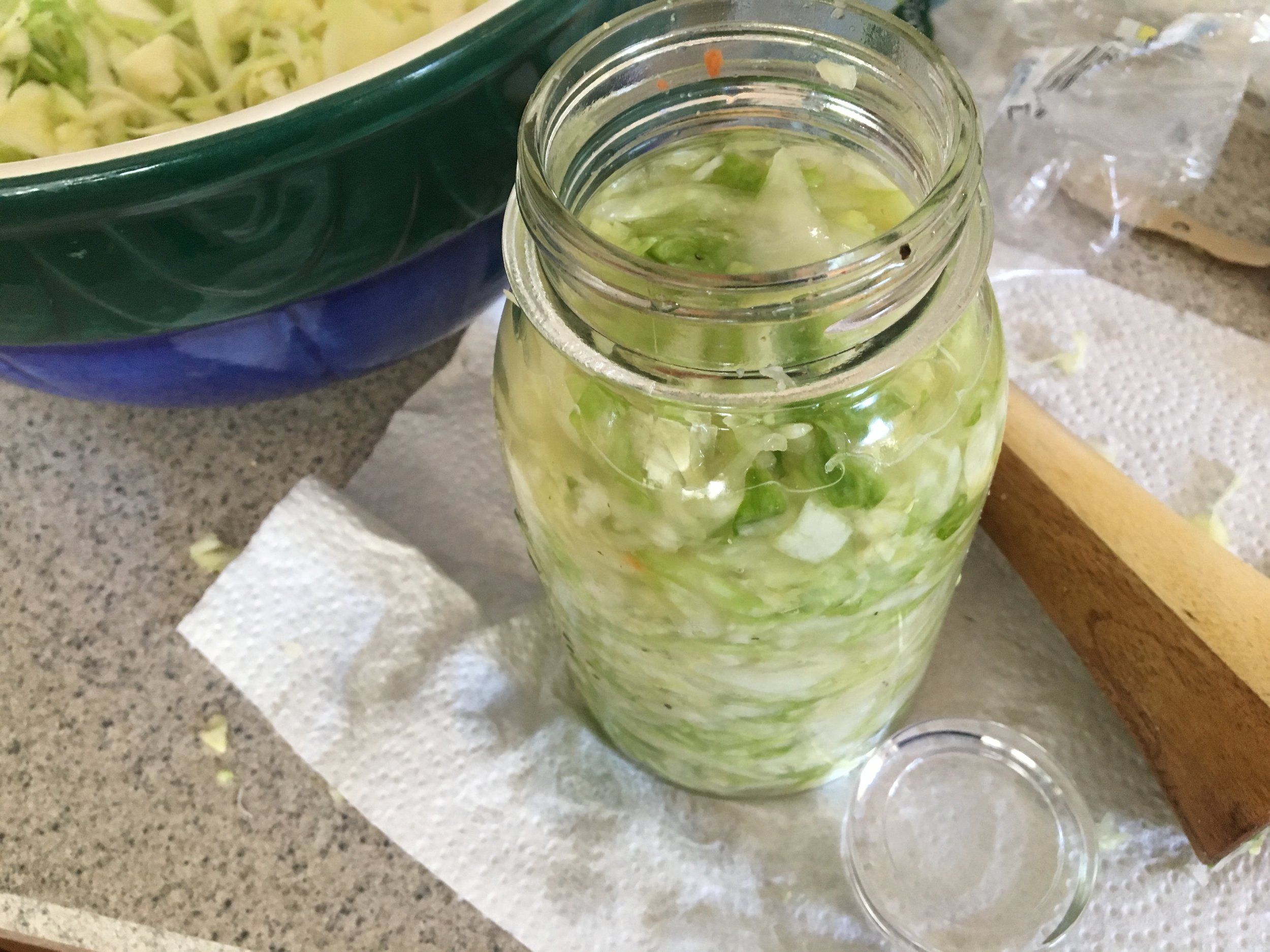
IMG_7869.JPG

*Note-  I stumbled upon masontops.com by accident from another blogger.  If you prefer another method or have your own tips for making homemade sauerkraut, please feel free to share it below so others can benefit:)

If you have children or grandchildren, let them help in the process. This would make a great family summer science experiment!

Happy fermenting!

Enjoy!

IMG_7975.JPG


Yum

Cooking Tip: Cooking Substitutions

cooking tipsSheri SpalloneComment
Cooking Tip!  Cooking Substitutions

Cooking Tip!  Cooking Substitutions

There's nothing worse than realizing you don't have an ingredient after you've started a recipe.  I know, "mise en place", which is fancy for everything in place, but there are times when I am simply caught off guard.

I'm usually prepared with everything I need before I begin cooking, but there are occasions when a container or box is left in the refrigerator or the pantry...and it's EMPTY (my crazy teenagers left it empty...I guess they believe it will magically refill itself)!  

Have no fear, below are some emergency ingredient substitutions that may help save the day (and your recipe).  We'd love to hear your favorite substitution!

If a Recipe asks for: 

Flour

  • 1 cup of self-rising flour---substitute with 1 cup of flour and 1 1/4 teaspoon (tsp) baking powder and 1/8 teaspoon (tsp) salt.
  • 1 cup of biscuit mix---substitute with 1 cup of flour, 2 Tablespoons (Tbsp) of shortening, and 1 1/2 teaspoons (tsp) baking powder.
  • 1 cup of sifted cake flour---for every cup of all-purpose flour, remove 2 Tablespoons (Tbsp) of flour and substitute with cornstarch and sift together.
  • 1 cup bread flour---substitute 1 cup all-purpose flour.

Thickening agents

  • 2 Tablespoons (Tbsp) flour---substitute 2 Tbsp. cornstarch, or 3 1/2 whole eggs, or 7 egg yolks, or 3/4 oz. bread crumbs.

Leavening agents

  • 1 teaspoon (tsp) baking powder---substitute with 1/4 teaspoon (tsp) baking soda and 1/2 teaspoon (tsp) cream of tartar, or 2 egg whites, or 1/4 teaspoon (tsp) and 1/2 cup yogurt, buttermilk, or sour cream.
  • 1 package active (2T) dry yeast--- substitute 1 cake compressed yeast, or instant yeast.

Dairy- Milk and Cream

  • 1 cup heavy cream---substitute with 1/3 cup of room temperature butter and 3/4 cup of milk.
  • 1 cup light cream--7/8 cup milk plus 3 Tablespoons (Tbsp) butter.
  • 1 cup buttermilk (or sour milk)---substitute with 1 cup of milk and 1 Tablespoon (Tbsp) of either vinegar or lemon juice.  Let sit for 5 minutes.  Stir.  Or,  substitute 1 3/4 teaspoons (tsp) cream of tartar and 1 cup sweet milk.
  • 1 cup sour cream---substitute 1/3 cup butter and 2/3 cup sour milk recipe.

Spices

  • 1 Tablespoon (Tbsp) fresh herbs---substitute 1 teaspoon (tsp) dried herbs
  • 1 Medium onion---substitute 1 Tablespoon (Tbsp) onion powder
  • 1 teaspoon (tsp) allspice---substitute with 1 teaspoon (tsp) of cinnamon, nutmeg, and ground cloves
  • 1 clove garlic---substitute 1/4 teaspoon (tsp) garlic powder
  • 1 teaspoon pumpkin pie spice---substitute 1/2 teaspoon (tsp) cinnamon, 1/4 tsp. ground ginger, 1/8 tsp. nutmeg, and 1/8 tsp. ground allspice.
  • 1 teaspoon (tsp) nutmeg---substitute 1 tsp. mace
  • 1 teaspoon (tsp) dry mustard---substitute with 1 Tablespoon (Tbsp) prepared mustard.
  • 1 teaspoon (tsp) basil---substitute fresh basil (a couple of leave) or 1 tsp oregano.
  • 1 teaspoon (tsp) fennel---substitute 1 (tsp) anise or tarragon.
  • 1 teaspoon (tsp) sage---substitute 1 (tsp) thyme.
  • 1 teaspoon (tsp) onion powder---substitute 1 small fresh onion.

Sugar and Sweeteners

  • 1 cup brown sugar---substitute with 1 cup white sugar and 1/4 cup of molasses.
  • 1 cup sugar---substitute 1 cup molasses plus 1/2 teaspoon (tsp.) baking soda, or 1/2 cup honey plus 1/2 teaspoon (tsp.) baking soda, or 1 cup maple syrup and 1/4 cup corn syrup, or 1 cup maple syrup and 1/4 tsp. baking soda.
  • 1 cup corn syrup---substitute 1 cup sugar plus additional 1/4 cup of liquid in the recipe, or 1 cup brown rice syrup.
  • 1 cup honey---substitute 1 1/4 cup sugar plus additional 1/4 cup of liquid in the recipe, or 1 cup molasses, or 1 cup light agave nectar.
  • 1 oz. (1 square) unsweetened chocolate---substitute with 1/2 Tablespoons (Tbsp) butter and 2 Tablespoons cocoa.

Happy Cooking!

Thank you for visiting.

Yum